



Calcium Channel
Ca2+ channels; Ca channels
Calcium channel is an ion channel which displays selective permeability to calcium ions. It is sometimes synonymous as voltage-dependent calcium channel, although there are also ligand-gated calcium channels. Voltage-gated calcium (CaV) channels catalyse rapid, highly selective influx of Ca2+ into cells despite a 70-fold higher extracellular concentration of Na+. Some calcium channel blockers have the added benefit of slowing your heart rate, which can further reduce blood pressure, relieve chest pain (angina) and control an irregular heartbeat.
Calcium Channel Isoform Specific Products
All Product Categories
-
Calcium Channel Inhibitors
(593)
View all products
-
Calcium Channel Agonists
(35)
View all products
-
Calcium Channel Antagonists
(209)
View all products
-
Calcium Channel Activators
(88)
View all products
-
Calcium Channel Modulators
(45)
View all products
-
Calcium Channel Chemical
(1)
View all products
-
Calcium Channel Inducers
(12)
View all products
-
Calcium Channel Controls
(10)
View all products
-
Calcium Channel Ligands
(7)
View all products
-
Calcium Channel Related Products (1237)
Related Products (1237)

-
Antibodies (29)
-
Related Compound Screening Libraries (1)
-
Calcium Channel Isoform Comparison

-
Cav 2.2/3.2 blocker 1
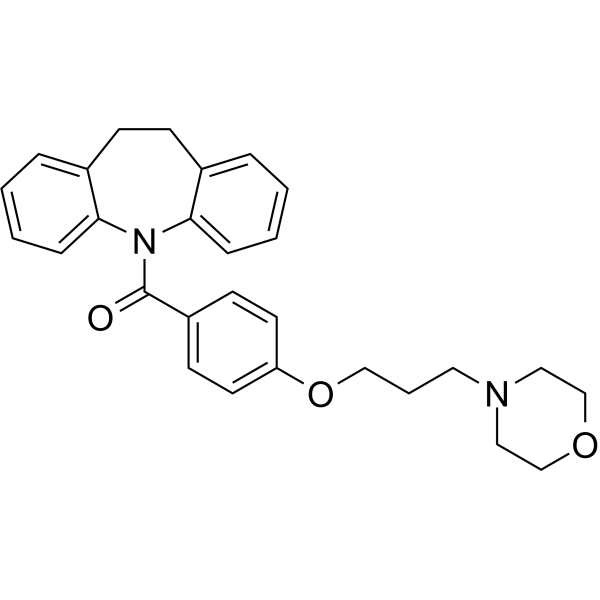 0 ImagesCat. No.: HY-147639CAS No.: 2987640-67-3Cav 2.2/3.2 blocker 1 (Compound 9e) is a neuronal calcium channel blocker with IC50 values of 78 μM and 80 μM against Cav2.2 and Cav3.2, respectively. Cav 2.2/3.2 blocker 1 can penetrate the CNS.
-
(S)-Lercanidipine
 0 ImagesCat. No.: HY-B0612BCAS No.: 185197-71-1(S)-Lercanidipine is a calcium channel blocker with antihypertensive and neuroprotective activities. (S)-Lercanidipine reduces oxidative stress and protects auditory sensory hair cells from noise-induced damage. (S)-Lercanidipine showed significant protective effects on cell viability in in vitro experiments, especially at low concentrations. (S)-Lercanidipine has been found to effectively reduce the hearing threshold of mice after noise stimulation and protect the survival of outer hair cells. The antioxidant properties of (S)-Lercanidipine are reflected in its increased expression of antioxidant enzyme genes and decreased expression of oxidative enzyme genes. (S)-Lercanidipine administration is effective in reducing noise-induced hearing loss both before and after noise exposure. (S)-Lercanidipine may alleviate noise-induced hearing loss and protect the survival of outer hair cells through its antioxidant mechanism.
-
Chromostatin (bovine)
 0 ImagesCat. No.: HY-P3041CAS No.: 133633-11-1Chromostatin bovine is a chromogranin A (CGA) derivative peptide, which inhibits postassium or carbamoylcholine induced catecholamine release with an ID50 of 5 nM. Chromostatin bovine reduces calcium flux, enhances the desensitization process of the cholinergic-evoked secretory response and modulates the endocrine response associated with catecholamine.
-
Calcium Channel antagonist 3
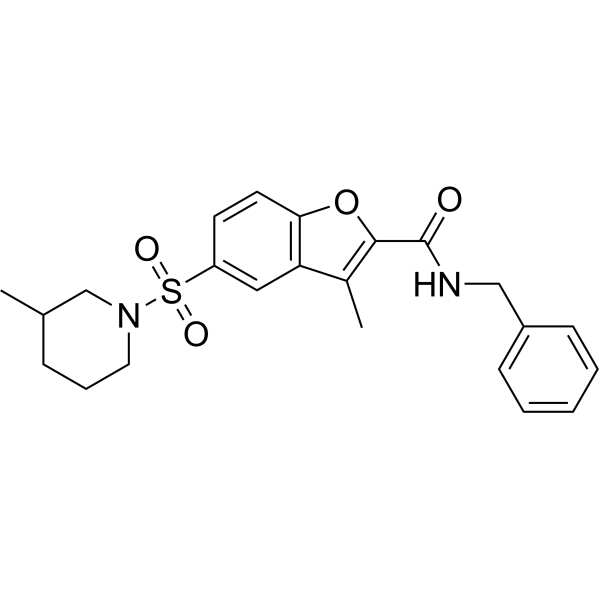 0 ImagesCalcium Channel antagonist 3 (compound 397) is an inhibitor of voltage-gated calcium channels with an IC50 value of 5-20μM.
-
Levomepromazine-d6 hydrochloride
 0 ImagesCat. No.: HY-166562SSynonyms: Methotrimeprazine-d6 hydrochlorideLevomepromazine-d6 hydrochloride (Methotrimeprazine-d6 hydrochloride) is the deuterium labeled Levomepromazine hydrochloride. Levomepromazine (Methotrimeprazine) hydrochloride is an orally active antipsychotic compound and Ca2+ release inducer. Levomepromazine inhibits SERCA pump and induces an increase in cytoplasmic Ca2+ levels. Levomepromazine hydrochloride has antagonistic effects on a variety of neurotransmitter receptors, including dopamine, cholinergic, serotonin, and histamine receptors. Levomepromazine hydrochloride can induce adaptive ER stress and autophagy. In addition, Levomepromazine hydrochloride has antiviral, anti-inflammatory, neuroprotective and analgesic, sedative and anti-injurious activities. Levomepromazine hydrochloride can be used in the study psychiatric disorders and relieving nausea and vomiting.
-
dl-Tetrandrine
 0 ImagesCat. No.: HY-13764ACAS No.: 23495-89-8dl-Tetrandrine is an orally active and brain-penetrant calcium channel blocker that inhibits voltage-dependent calcium channels. dl-Tetrandrine selectively blocks Ca2+ influx with an IC50 value of approximately 1-10 μM. dl-Tetrandrine exerts anti-inflammatory, immunosuppressive, and anti-arrhythmic activities by inhibiting intracellular calcium overload, and can reverse multidrug resistance in tumor cells. dl-Tetrandrine is promising for research of autoimmune diseases (such as rheumatoid arthritis), cardiovascular diseases, and tumor drug resistance reversal.
-
KARI 101
 0 ImagesCat. No.: HY-186165CAS No.: 3061559-97-2KARI 101 is a blood-brain barrier permeable acid sphingomyelinase (ASM) inhibitor. KARI 101 directly inhibits ASM activity and reduces ceramide production. KARI 101 induces Ca2+ mobilization, activates AMPK and triggers GHSR1α internalization. KARI 101 can be used for the research of Alzheimer's disease.
-
Cavα2δ1&NET-IN-1
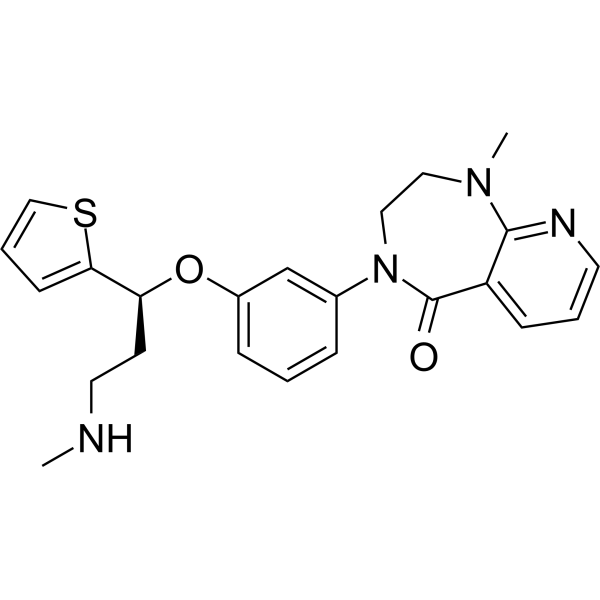 0 ImagesCat. No.: HY-148862CAS No.: 2314361-39-0Cavα2δ1&NET-IN-1 (Compound 59S) is a dual inhibitor of the α2δ‑1 subunit of voltage-gated calcium channels (Cavα2δ-1) and the norepinephrine transporter (NET). Cavα2δ1&NET-IN-1 inhibits Cavα2δ-1 with a Ki of 112 nM. Cavα2δ1&NET-IN-1 inhibits NET with a Ki of 383 nM and IC50 of 67 nM. Cavα2δ1&NET-IN-1 can be used for research of pain.
-
Perisulfakinin
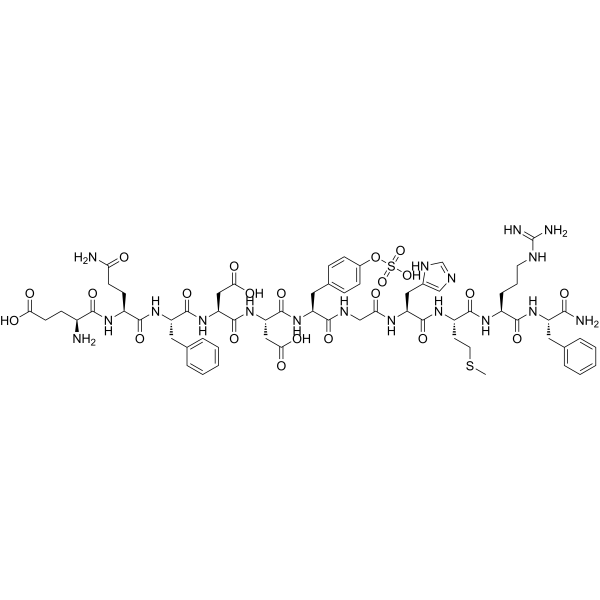 0 ImagesCat. No.: HY-P4806CAS No.: 125131-58-0Perisulfakinin, a satiety signaling neuropeptide, inhibits the activity of central neurons promoting general activity.
-
D-myo-Inositol 1,4,5-trisphosphate sodium salt
 0 ImagesD-myo-inositol 1,4,5-trisphosphate sodium salt is a widely distributed intracellular second messenger. D-myo-inositol 1,4,5-trisphosphate sodium salt acts as a potent agonist of the Ins (1,4,5) P3 receptor with an EC50 of 0.12 μM and inhibits bovine PLC-δ1, with an IC50 of 5.4 μM for binding and an IC50 of 12.4 μM for hydrolysis. D-myo-inositol 1,4,5-trisphosphate sodium saltis metabolized into Ins (1,4) P2 and Ins (1,3,4,5) P4. D-myo-inositol 1,4,5-trisphosphate sodium salt mediates various cellular processes, including growth, development, fertilization, secretion, contraction and neuromodulation. D-myo-inositol 1,4,5-trisphosphate sodium salt inhibits PIP2 hydrolysis and Ca2+-ATPase activity. D-myo-inositol 1,4,5-trisphosphate sodium salt is used for cardiac preconditioning, exerts cardioprotective effects and mimics ischemic preconditioning. D-myo-inositol 1,4,5-trisphosphate sodium salt is applied in studies related to intracellular calcium and phosphoinositol signaling pathways.
-
CYD-1-79
 0 ImagesCat. No.: HY-182091CAS No.: 2220235-94-7CYD-1-79 is a selective positive allosteric modulator of 5-HT2C receptor. CYD-1-79 potentiates 5-HT-evoked intracellular calcium release via a topographically distinct allosteric site. CYD-1-79 shows significant inhibition of binding at dopamine D3 receptor, DAT, and α2A/α2B adrenergic receptors. CYD-1-79 modulates 5-HT2C receptor-mediated spontaneous ambulation in rodents and synergizes with a low dose of a 5-HT2C receptor agonist. CYD-1-79 attenuates relapse vulnerability of psychoactive substance in a rodent self-administration model. CYD-1-79 can be used for the research of neurological disease.
-
RQ-00311651
 0 ImagesCat. No.: HY-118030CAS No.: 1257116-00-9RQ-00311651 is a T-type calcium channel blocker that specifically targets the Cav3.2 isoform with a role in neuropathic and visceral pain. RQ-00311651 significantly inhibits T currents in HEK293 cells expressing human Cav3.1 or Cav3.2. RQ-00311651 also inhibited high potassium-induced calcium signaling. RQ-00311651 also inhibits antiallergic properties in rats and mice with neuropathic pain induced by spinal nerve injury or Paclitaxel (HY-B0015). Oral and intraperitoneal injection (10-20 mg/kg) inhibits Cerulein (HY-A0190)-induced acute pancreatitis and cyclophosphamide-induced cystitis in mice.
-
sFTX-3.3
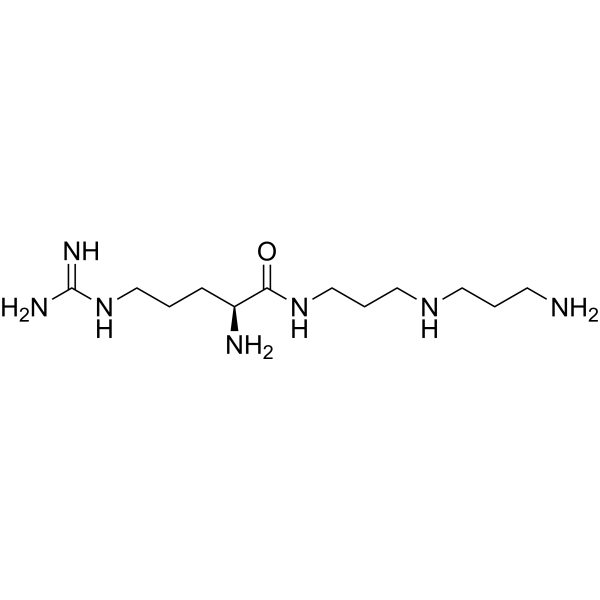 0 ImagesCat. No.: HY-131942CAS No.: 141997-14-0sFTX-3.3 is a Ca2+ channel antagonist with IC50s of approximately 0.24 mM and 0.70 mM against P-type and N-type channels.
-
Cetiedil citrate
 0 ImagesCat. No.: HY-128547CAS No.: 16286-69-4Cetiedil citrate is a vasodilator and antihemolytic agent. Cetiedil citrate exerts anti-sickle cell anemia effects by blocking Ca2+-activated K+ channels (Gardos/KCa3.1). Cetiedil citrate is a muscarinic receptor antagonist that inhibits calcium-dependent release of acetylcholine (ACh) from mediated reconstituted proteoliposomes, with a Ki value of 5 μM. Cetiedil citrate possesses analgesic, spasmolytic and local anesthetic activities. Cetiedil citrate can be used in research related to ischemic leg pain caused by vascular diseases and sickle cell disease.
-
Cimicifugic acid D
 0 ImagesCat. No.: HY-N15735CAS No.: 219986-51-3Synonyms: 2-Caffeoylpiscidic acidCimicifugic acid D (2-Caffeoylpiscidic acid) is a benzyltartaric acid ester that induces vasodilation of precontracted rat aortic strips and endothelium-independent relaxation mechanism. Cimicifugic acid D inhibits extracellular Ca2+ influx through receptor-operated Ca2+ channels (ROC) in Norepinephrine (HY-13715)-induced contraction of rat aortic strips, without affecting voltage-dependent Ca2+ channels (VDC) or K+-induced contractions.
-
L-Phenylalanine-13C9,15N,d8
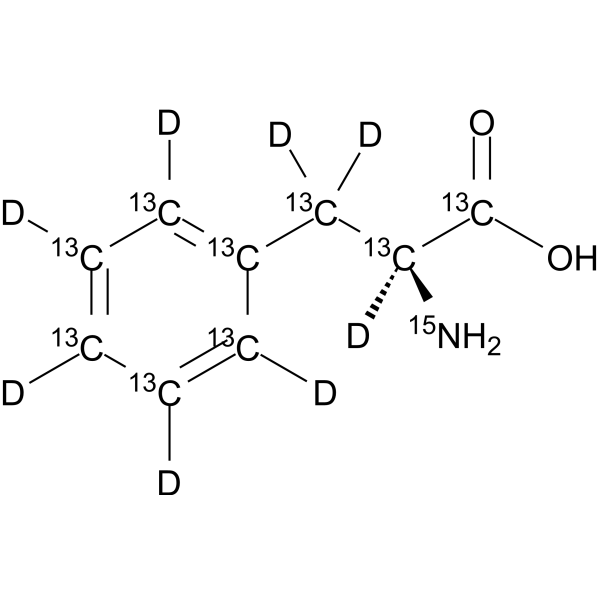 0 ImagesCat. No.: HY-N0215S9CAS No.: 1994331-22-4Synonyms: (S)-2-Amino-3-phenylpropionic acid-13C9,15N,d8L-Phenylalanine-13C9,15N,d8 is the deuterium, 13C-, and 15-labeled L-Phenylalanine. L-Phenylalanine ((S)-2-Amino-3-phenylpropionic acid) is an essential amino acid isolated from Escherichia coli. L-Phenylalanine is a α2δ subunit of voltage-dependent Ca+ channels antagonist with a Ki of 980 nM. L-phenylalanine is a competitive antagonist for the glycine- and glutamate-binding sites of N-methyl-D-aspartate receptors (NMDARs) (KB of 573 μM ) and non-NMDARs, respectively. L-Phenylalanine is widely used in the production of food flavors and pharmaceuticals.
-
Cav 3.2 inhibitor 2
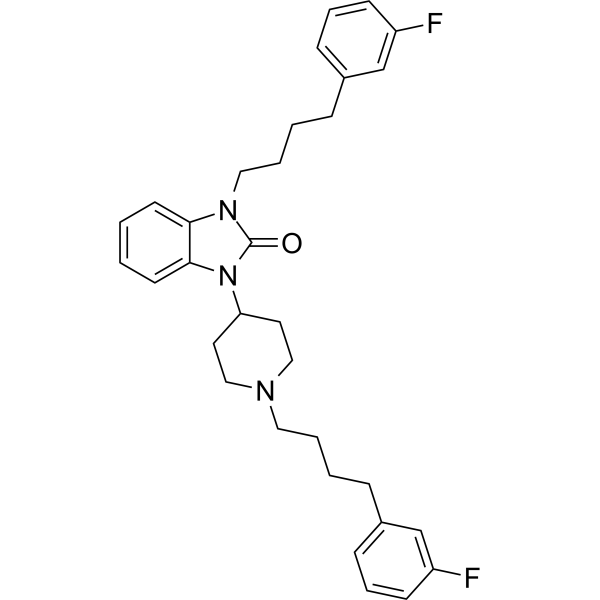 0 ImagesCat. No.: HY-151451CAS No.: 2878598-92-4
-
D-myo-Inositol-4-phosphate monoammonium
 0 ImagesCat. No.: HY-W403046AD-myo-Inositol-4-phosphate monoammonium is a metabolite of D-myo-Inositol 1,4,5-trisphosphate. D-myo-Inositol 1,4,5-trisphosphate, a second messenger, elicits Ca2+ mobilization. D-myo-Inositol 1,4,5-trisphosphate inhibits the binding of phosphoinositide-specific phospholipase C-delta 1 (PLC-delta 1) to bilayer membranes composed of phosphatidylcholine (PC) and phosphatidylinositol 4,5-bisphosphate (PIP2) .
-
L-Ascorbic acid magnesium
 0 ImagesCat. No.: HY-B0166ECAS No.: 15431-40-0Synonyms: L-Ascorbate magnesium; Vitamin C magnesiumL-Ascorbic acid (L-Ascorbate) magnesium, an electron donor, is an endogenous antioxidant. L-Ascorbic acid selectively inhibits Cav3.2 channels with an IC50 of 6.5 μM. L-Ascorbic acid is also a collagen deposition promoter and elastin production inhibitor. L-Ascorbic acid exhibits anticancer effects by generating reactive oxygen species (ROS) and selectively damaging cancer cells.




